
Definition
What is Somatic Dentistry?
Somatic Dentistry is a perspective within dentistry that reads how sensation and movement in the teeth and mouth connect with the rest of the body, distinguishing connections established by anatomy, those observed in human studies and those that are still hypotheses.
- Established by anatomyteeth → trigeminal nerve → brainstem3
- Observed in human studiesperiodontal disease or tooth loss ↔ systemic conditions (association)4,5, occlusion ↔ body posture (findings are mixed)6,7
- Still a hypothesisthe connection to the hippocampus (memory and cognition)8, what is seen in the clinic
This site does not use clinical cases as evidence.
It covers, among other things, the teeth, occlusion, tongue, temporomandibular joint, breathing and posture, and the path by which their sensation reaches the brain through proprioception and the trigeminal nerve; what is seen in the clinic is kept as a testable hypothesis.
It is not a particular treatment or an officially recognized specialty; it is a definition that this site maintains with dates and a record of corrections.
The soma in Somatic is Greek for body1. The name expresses the intention to read the teeth and mouth as part of the body, and that connection is checked against the evidence, following the somatosensory and motor pathways2.
Definition and evidence map
- Established (solid)
- Observed in human studies (dashed)
- Still a hypothesis (dotted)
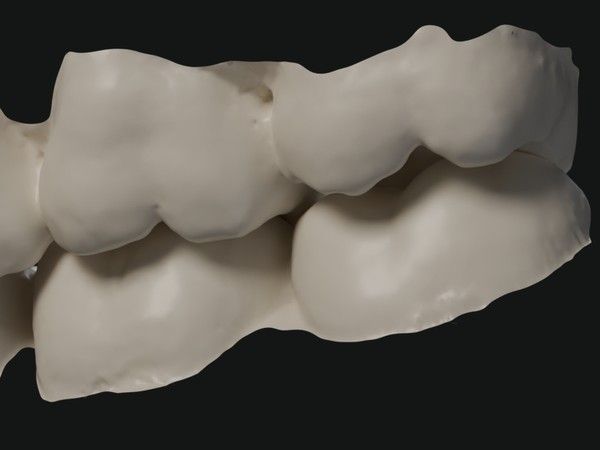
- 1Station 1: Occlusion Concept visualization Link to the next station: established (solid line)
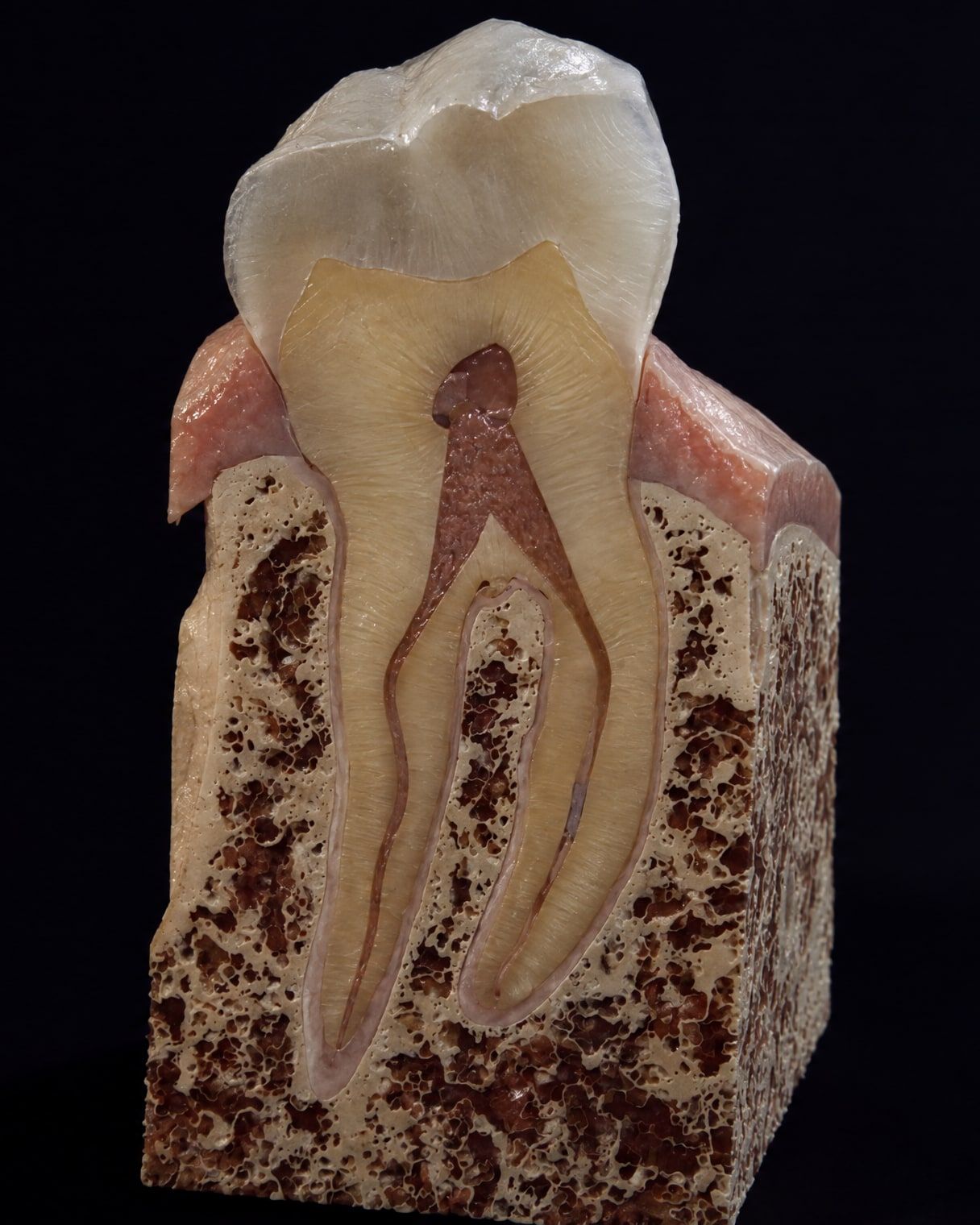
- 2Station 2: Periodontal ligament Concept visualization · redrawn with AI tools Link to the next station: established (solid line)
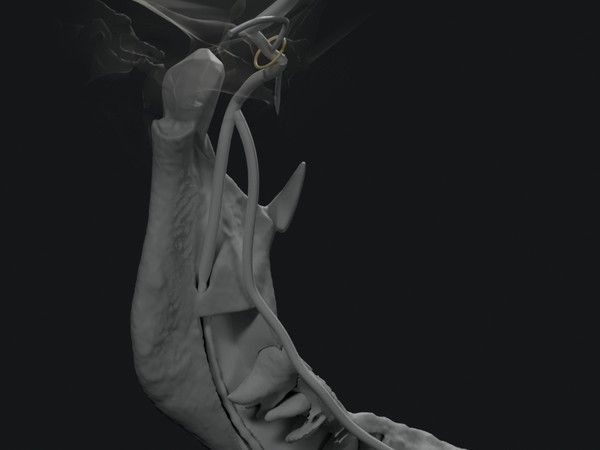
- 3Station 3: Trigeminal nerve Concept visualization Link to the next station: established (solid line)
- 4Station 4: Brainstem Concept visualization Link to the next station: still a hypothesis (dotted line)
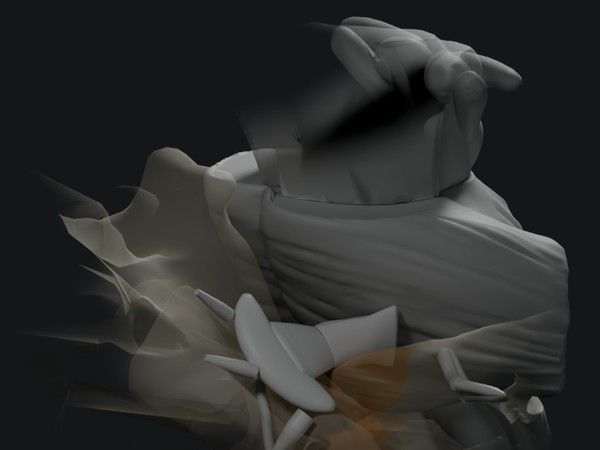
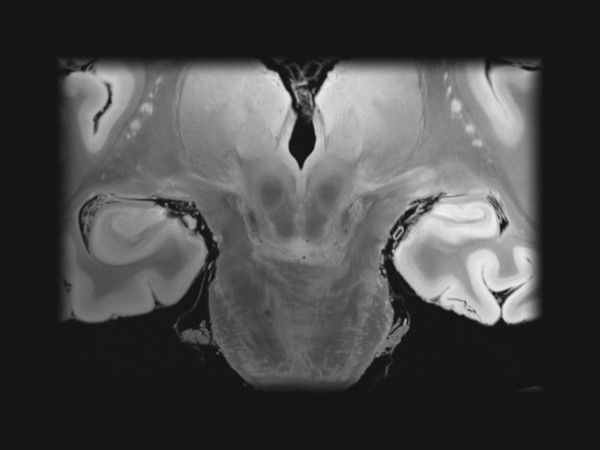
- 5Station 5: Hippocampus Real image · 7T MRI Link to the next station: not yet determined
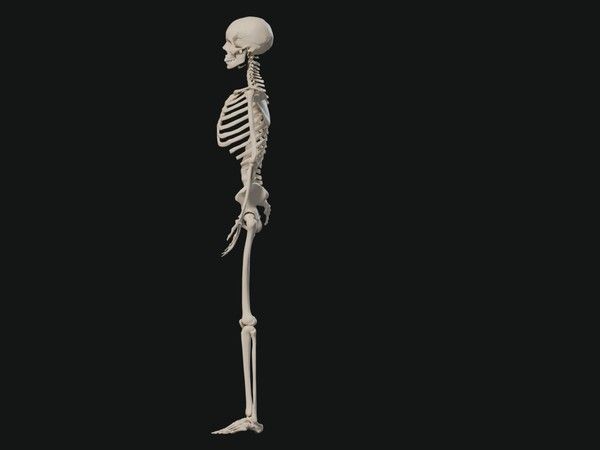
- 6Station 6: Whole body Concept visualization
Contents of this article
A question that leads from the mouth to the body
When we hold half a peanut with our front teeth, we use a force of less than 1 N9,10. To bite down and split it, we use 16–19 N, more than twenty times the holding force9. The periodontal ligament (PDL) that surrounds the tooth root is a thin tissue, 0.15–0.38 mm wide11, yet in each tooth it holds several hundred sensitive touch receptors12. This fine control draws on sensation from the PDL13, and its signals enter the brainstem along the trigeminal nerve, where they are used to choose the chewing movement3. The mouth is a small space, but the sensation and movement that pass through it are this finely tuned.
All along, I had been thinking of occlusal problems, gum problems, jaw-joint problems and the like as separate matters14. Once I came to understand the relationship between the teeth and the body, I began to ask whether the very act of doing something for patients as a dentist really helps the body, and I resolved once again to put together material of my own15. Whenever an answer was hard to see, I asked myself, “Could there be something I haven’t seen?”16
The more I studied, the clearer it became: saying that a connection exists is one thing, and how far that connection has been confirmed is another. Textbooks explain the anatomy of the path from the teeth through the trigeminal nerve to the brainstem3. The finding that people with more tooth loss had a higher risk of cognitive impairment was observed in human studies, but it does not show cause and effect5. Likewise, observational studies support an association between periodontal disease and vascular disease, but not causation: that is the conclusion of a statement from the American Heart Association4. The idea that tooth sensation is linked to memory and cognition is one I proposed in a hypothesis paper, and it is still a hypothesis8. One experiment found fewer neurons in the brainstem and hippocampus of Alzheimer’s disease model mice whose molars had been extracted17, but that is a result in mice, not in people.
For each connection, this site’s evidence map and evidence notes record separately what is established by anatomy, what is observed in human studies and what is still a hypothesis, and they keep what is seen in the clinic as a testable hypothesis. The aim is to state what is established clearly, what has been observed as far as it has been observed, and hypotheses as hypotheses. The soma in the name, that is, the body, is the starting point that the teeth and mouth are part of the body, and the way to read that body is through the pathways of sensation and movement. Reading the layers apart like this shows how far a question that began in the mouth has reached, and where it stops.
The mouth is one of the high-resolution windows into the body.
Definition and evidence map
How far has the connection between the mouth and the body been confirmed?
From the teeth through the trigeminal nerve to the brainstem, the path is established by anatomy; the connection to the hippocampus is still a hypothesis; and between periodontal disease or tooth loss and systemic conditions there are associations observed in human studies. The tables below follow the six stations of the anatomical journey, giving the layer and sources for each connection, and group separately the associations that are not neural pathways. Cells we could not confirm are marked “Not yet determined.”
Table 1 Connections between the six stations, and the layer of evidence for each
| Connection | What connects | Layer | Mark | Evidence | Evidence note |
|---|---|---|---|---|---|
| ① Occlusion (start) | How the upper and lower teeth come together | Station (not a connection) | — | Not yet determined | Not yet determined |
| ① Occlusion → ② PDL | Mechanoreceptors in the PDL around the root pick up the force placed on the tooth. Each tooth has several hundred of these receptors. | Established | Solid | Textbooks Ten Cate11, Klineberg & Eckert, ch. 1012 · Human experiment Force for holding half a peanut with the front teeth: under 1 N9,10 | How small a force can a tooth feel? |
| ② PDL → ③ Trigeminal nerve | Periodontal signals travel through the alveolar nerves to the trigeminal ganglion, and these signals have also been recorded from the inferior alveolar nerve in people. | Established | Solid | Textbooks Lang & Lindhe, ch. 6 (Jacobs)13, Okeson, ch. 23 · Human nerve recordings Periodontal signals recorded from the inferior alveolar nerve10 | Not yet determined |
| ② PDL → Mesencephalic trigeminal nucleus | Some of the deep sensation from the PDL and from the muscle spindles of the jaw-closing muscles goes to the mesencephalic trigeminal nucleus and on to the jaw-closing motor neurons. | Not yet determined (textbook check in progress) | — | Review of animal data Mesencephalic trigeminal nucleus18 | Not yet determined |
| ③ Trigeminal nerve → ④ Brainstem | Signals enter the trigeminal sensory nuclei of the pons and medulla, and the brainstem’s chewing rhythm generator uses this information to choose the chewing movement. | Established | Solid | Textbook Okeson, ch. 23 · Review (mammalian data) Lund & Kolta19 | Not yet determined (Figure 1 of “How small a force can a tooth feel?” summarizes this link) |
| ④ Brainstem → ⑤ Hippocampus | The idea that sensory input from the teeth is linked to memory and cognition. | Still a hypothesis | Dotted | Animal data In Alzheimer’s disease model mice, neurons in the mesencephalic trigeminal nucleus and the hippocampus decreased after molars were extracted17 · Human experiment (limitation) After periodontal anesthesia, prefrontal blood flow decreased, but memory and cognition were not measured; 5 people20 · Hypothesis The editor’s hypothesis paper8 | Not yet determined |
| ⑤ Hippocampus → ⑥ Whole body | Not yet determined | Not yet determined | — | Not yet determined | Not yet determined |
| ① Occlusion → ⑥ Whole-body posture | The relationship between occlusion and body posture. Some studies have reported a relationship and others have not; where correlations are reported they are weak, and neither a predictable relationship nor causation has been confirmed. | Observed in human studies | DashedFindings are mixed | Reviews Cuccia & Caradonna21, Manfredini et al.6, Michelotti et al.22 · Systematic reviews 21 posturography studies23, 12 stabilometric platform studies7 | Not yet determined |
Table 2 Associations observed in human studies (branches that are not neural pathways; dashed lines on the map)
| Association | What was observed | Layer | Mark | Evidence |
|---|---|---|---|---|
| Periodontal disease ↔ systemic disease | Observational studies support an association between periodontal disease and atherosclerotic vascular disease independent of known confounders, but do not support causation. Chronic periodontitis has been associated with elevated blood markers of inflammation. | Observed in human studies | Dashed | Scientific statement American Heart Association4 · Review Kamer et al.24 (the mechanisms linking periodontitis and Alzheimer’s disease are at the proposal stage) |
| Periodontal bacteria ↔ brains of people with Alzheimer’s disease | The enzymes and DNA of a periodontitis bacterium (P. gingivalis) were found in patients’ brain tissue. Enzyme levels were higher than in the brains of people without dementia, though some of those brains contained them too. | Observed in human studies | DashedCausal role still a hypothesis | Human brain tissue and mouse experiments Dominy et al.25 |
| Tooth loss ↔ cognitive impairment and dementia | In a meta-analysis of 14 longitudinal studies (34,074 people), people with more tooth loss had 1.48 times the risk of cognitive impairment and 1.28 times the risk of a dementia diagnosis; among people who used dentures, the association was not statistically significant. | Observed in human studies | Dashed | Meta-analysis of observational studies Qi et al.5 |
How are the three layers distinguished?
Connections are sorted by the kind of source that supports each one.
| Layer (line) | What goes in it | Example |
|---|---|---|
| Established (solid) | Connections that textbooks explain through anatomy and function | teeth → trigeminal nerve → brainstem |
| Observed in human studies (solid: measured in people · dashed: association in observational studies) | Experiments and nerve recordings measured in people, and associations seen in observational studies. Because associations do not show cause and effect, they are drawn separately on the map, with dashed lines | periodontal disease or tooth loss ↔ systemic conditions (association), occlusion ↔ body posture (findings are mixed) |
| Still a hypothesis (dotted) | Connections not confirmed in people, that is, connections supported only by animal data and connections proposed in a hypothesis paper, along with what is seen in the clinic | the connection to the hippocampus (memory and cognition) |
Animal data are a kind of source, not a layer. When animal data show in detail a connection that textbooks explain, it is recorded as “Established”; when animal data alone support a connection not confirmed in people, it is recorded as “Still a hypothesis.” When studies of the same question disagree, the mark “Findings are mixed” is added alongside the layer.
What is Somatic Dentistry not?
Somatic Dentistry is not a treatment or an officially recognized specialty, nor is it the same as other fields with similar names. Each of those fields also draws on a philosophy and training built up over many years to look at how a person’s whole body is connected. When I see people who study the body and care for patients from this perspective, I always find it remarkable. That is because the very attitude of trying to see the whole body in its connections is itself a deep form of study. So this page sets out only what each field centers on, and how this perspective reads.
- It is not a particular treatment or clinical approach. It is a perspective that reads research and marks the layer of evidence for each connection.
- It is not alternative medicine. It is a perspective within dentistry that reads anatomy, human studies and hypotheses as distinct from one another.
- It is not a theory that explains the body’s many symptoms by the teeth or occlusion alone. The path from the teeth to the brainstem is established by anatomy, but the connections beyond it are associations observed in human studies, are still hypotheses or are areas where findings are mixed.
- It is not another name for holistic or biological dentistry. Holistic and biological dentistry is described as an approach in dentistry that considers how dental materials and oral health affect the body as a whole26. Somatic Dentistry starts from the sensory and motor pathways of the teeth and mouth, and reads them by recording, for each connection, which layer it sits in: anatomy, human studies or hypothesis.
- It is also a different field from psychosomatic dentistry. Psychosomatic dentistry deals with oral symptoms whose cause examinations have not found, in the context of the relationship between mind and body27. The soma in this name means the body, and this perspective reads the sensory and motor pathways of the teeth and mouth according to the layers of evidence.
- It is not body-movement education, such as somatics, or psychotherapy. Somatics is movement education that focuses attention on sensing the body from within28. Somatic Dentistry does not teach a training method; it reads research in dentistry.
- It is not the name of an officially recognized specialty or of an academic society. It is a definition set by this site and maintained with dates and a record of corrections.
Evidence
- What this page can say. Textbooks explain that sensory signals from the teeth and mouth travel along the trigeminal nerve to the brainstem and are used in chewing movements. Associations between periodontal disease or tooth loss and systemic conditions have been observed in human studies.
- What this page cannot say. It does not show that tooth sensation is linked to memory, that the associations are cause and effect, or that any intervention involving the teeth or occlusion has an effect on the body or on brain function.
The table below collects, for each question in the text, the supporting evidence and its limitations. Each cell lists textbooks first, then consensus statements and reviews (including systematic reviews), human studies, animal experiments and hypotheses; within each tier, sources with more citations (OpenAlex, retrieved October 11, 2026) come first.
Table 3 Questions in the text and their evidence
| Question in the text | Supporting evidence | Contrary results and limitations | Layer |
|---|---|---|---|
| How far has the connection between the mouth and the body been confirmed? Established as far as the brainstem, a hypothesis for the hippocampus, associations with systemic conditions |
|
| Varies by connection (Tables 1 and 2) |
| How are the three layers distinguished? By the kind of source |
|
| Editorial interpretation |
| What is Somatic Dentistry not? Not a treatment, a specialty or a neighboring field |
| Editorial interpretation | |
| The meaning of the name soma is Greek for body |
| Established (etymology), editorial interpretation (meaning of the name) |
Show the evidence for every statement
Table 4 Claims table: the evidence grade and sources of the 55 main factual statements in the text (numbers refer to the reference list)
| Claim | Evidence grade | Source no. · DOI |
|---|---|---|
| The soma in Somatic is Greek for body. | Established | 1 |
| The soma in the name, that is, the body, is the starting point that the teeth and mouth are part of the body, and the way to read that body is through the pathways of sensation and movement. | Editorial interpretation | 1; 2 doi:10.1111/j.1365-2842.2006.01623.x; Editor's decision, October 11, 2026 |
| The meaning of the name, and who set the definition | Editorial interpretation | 1; 2 doi:10.1111/j.1365-2842.2006.01623.x; Editor's decision, October 11, 2026 |
| The name expresses the intention to read the teeth and mouth as part of the body, and that connection is checked against the evidence, following the somatosensory and motor pathways. | Editorial interpretation | 2 doi:10.1111/j.1365-2842.2006.01623.x; Editor's decision, October 11, 2026 |
| It covers, among other things, the teeth, occlusion, tongue, temporomandibular joint, breathing and posture, and the path by which their sensation reaches the brain through proprioception and the trigeminal nerve; what is seen in the clinic is kept as a testable hypothesis. | Editorial interpretation | 3 ISBN 978-0-323-58210-0; Editor's decision, October 11, 2026 |
| The path from the teeth through the trigeminal nerve to the brainstem is established by anatomy. | Established | 3 ISBN 978-0-323-58210-0 |
| PDL → trigeminal nerve: periodontal signals travel through the alveolar nerves to the trigeminal ganglion, and these signals have also been recorded from the inferior alveolar nerve in people | Established | 3 ISBN 978-0-323-58210-0; 10 doi:10.1016/s0301-0082(96)00016-0; 13 ISBN 978-0-470-67248-8 |
| Trigeminal nerve → brainstem: signals enter the trigeminal sensory nuclei of the pons and medulla, and the brainstem's chewing rhythm generator uses this information to choose the chewing movement | Established | 3 ISBN 978-0-323-58210-0; 19 doi:10.1007/s00455-006-9027-6 |
| The brainstem's chewing rhythm generator chooses the chewing movement from the information the teeth and PDL feed back | Established | 3 ISBN 978-0-323-58210-0 |
| Sensory signals from the teeth and mouth enter the brainstem (pons) along the trigeminal nerve | Established | 3 ISBN 978-0-323-58210-0 |
| The mouth is a small space, but the sensation and movement that pass through it are this finely tuned. | Editorial interpretation | 3 ISBN 978-0-323-58210-0; 9 doi:10.1007/BF00230428; 13 ISBN 978-0-470-67248-8 |
| Tooth sensation is carried along the trigeminal nerve to the brainstem | Established Link to memory and cognition still a hypothesis | 3 ISBN 978-0-323-58210-0; 8 doi:10.1016/j.nbas.2026.100169; 19 doi:10.1007/s00455-006-9027-6; 20 doi:10.1038/srep36893 |
| The connection to the hippocampus is still a hypothesis, associations between periodontal disease or tooth loss and systemic conditions have been observed in human studies, and findings on occlusion and body posture are mixed. | Editorial interpretation | 4 doi:10.1161/CIR.0b013e31825719f3; 5 doi:10.1016/j.jamda.2021.05.009; 6 doi:10.1111/j.1365-2842.2012.02291.x; 7 doi:10.1080/08869634.2020.1857614; 8 doi:10.1016/j.nbas.2026.100169; 17 doi:10.3233/JAD-200257; 20 doi:10.1038/srep36893; 21 doi:10.1590/S1807-59322009000100011; 22 doi:10.1016/j.pio.2010.09.010; 23 doi:10.1111/j.1365-2842.2009.02019.x; 24 doi:10.1016/j.jalz.2007.08.004 |
| Periodontal disease and systemic disease: observational studies support an association between periodontal disease and atherosclerotic vascular disease independent of known confounders, but do not support causation | Observed in human studies | 4 doi:10.1161/CIR.0b013e31825719f3; 24 doi:10.1016/j.jalz.2007.08.004 |
| Tooth loss and cognition: in a meta-analysis of 14 longitudinal studies (34,074 people), people with more tooth loss had 1.48 times the risk of cognitive impairment (95% CI 1.18–1.87) and 1.28 times the risk of a dementia diagnosis (1.09–1.49). Among people who used dentures, the association was not statistically significant (RR 1.00, 95% CI 0.90–1.11) | Observed in human studies | 5 doi:10.1016/j.jamda.2021.05.009 |
| An association between tooth loss and cognitive impairment or dementia has been observed, but causation has not been confirmed | Observed in human studies | 5 doi:10.1016/j.jamda.2021.05.009 |
| Occlusion → whole-body posture: some studies have reported a relationship and others have not; where correlations are reported they are weak, and neither a predictable relationship nor causation has been confirmed | Observed in human studies Findings are mixed | 6 doi:10.1111/j.1365-2842.2012.02291.x; 7 doi:10.1080/08869634.2020.1857614; 21 doi:10.1590/S1807-59322009000100011; 22 doi:10.1016/j.pio.2010.09.010; 23 doi:10.1111/j.1365-2842.2009.02019.x |
| Brainstem → hippocampus: the idea that sensory input from the teeth is linked to memory and cognition | Still a hypothesis | 8 doi:10.1016/j.nbas.2026.100169; 17 doi:10.3233/JAD-200257; 20 doi:10.1038/srep36893 |
| The idea that tooth sensation is linked to memory or cognition (the editor's hypothesis paper) | Still a hypothesis | 8 doi:10.1016/j.nbas.2026.100169; 20 doi:10.1038/srep36893 |
| The force for holding half a peanut or a piece of biscuit with the central incisors is under 1 N (0.36–0.76 N across participants) and steady | Observed in human studies | 9 doi:10.1007/BF00230428 |
| The force for splitting half a peanut is 16.0–19.0 N across participants | Observed in human studies | 9 doi:10.1007/BF00230428 |
| The splitting force is more than twenty times the holding force (site calculation) | Editorial interpretation | 9 doi:10.1007/BF00230428 |
| The mouth is one of the high-resolution windows into the body. | Editorial interpretation | 9 doi:10.1007/BF00230428; 12 doi:10.1016/b978-0-7234-3809-0.00010-3; 13 ISBN 978-0-470-67248-8; Hämmerle et al. 1995 doi:10.1034/j.1600-0501.1995.060203.x |
| Human periodontal signals were recorded from the inferior alveolar nerve, which supplies the lower teeth | Observed in human studies | 10 doi:10.1016/s0301-0082(96)00016-0 |
| Occlusion → PDL: mechanoreceptors in the PDL around the root pick up the force placed on the tooth | Established | 11 ISBN 978-0-323-48524-1; 12 doi:10.1016/b978-0-7234-3809-0.00010-3 |
| The PDL is soft connective tissue between root and bone, 0.15–0.38 mm wide | Established | 11 ISBN 978-0-323-48524-1 |
| Each tooth's PDL holds several hundred highly sensitive touch receptors; none lie close to an implant | Established | 12 doi:10.1016/b978-0-7234-3809-0.00010-3 |
| Teeth feel the forces placed on them as touch (periodontal receptors provide the conscious perception of force) | Established | 12 doi:10.1016/b978-0-7234-3809-0.00010-3; 13 ISBN 978-0-470-67248-8; Hämmerle et al. 1995 doi:10.1034/j.1600-0501.1995.060203.x |
| Periodontal touch information is used mainly for the fine control of biting and chewing forces, not for protection | Established | 13 ISBN 978-0-470-67248-8 |
| All along, I had been thinking of occlusal problems, gum problems, jaw-joint problems and the like as separate matters. | Editor's view | 14 |
| Once I came to understand the relationship between the teeth and the body, I began to ask whether the very act of doing something for patients as a dentist really helps the body, | Editor's view | 15 |
| and I resolved once again to put together material of my own. | Editor's view | 15 |
| Could there be something I haven't seen? | Editor's view | 16 |
| PDL → mesencephalic trigeminal nucleus: some of the deep sensation from the PDL and from the muscle spindles of the jaw-closing muscles goes to the mesencephalic trigeminal nucleus and on to the jaw-closing motor neurons | Not yet determined Textbook check in progress | 18 doi:10.2334/josnusd.16-0845 |
| The mesencephalic trigeminal nucleus in the brainstem receives input from the PDL and muscle spindles and relays it mainly to the jaw-closing motor neurons | Animal data | 18 doi:10.2334/josnusd.16-0845 |
| In mammals, a pattern generator in the brainstem (pons and medulla) generates the chewing rhythm, and feedback from oral touch receptors, muscle spindles and PDL mechanoreceptors modifies it especially strongly | Established Review of mammalian (animal) data | 19 doi:10.1007/s00455-006-9027-6 |
| With the periodontal tissues anesthetized, prefrontal blood flow fell, but memory and cognition were not measured (5 people) | Observed in human studies | 20 doi:10.1038/srep36893 |
| Periodontal bacteria and the brain: the enzymes and DNA of a periodontitis bacterium (P. gingivalis) were found in the brain tissue of people with Alzheimer's disease; enzyme levels were higher than in the brains of people without dementia, though some of those brains contained them too | Observed in human studies Causal role still a hypothesis | 25 doi:10.1126/sciadv.aau3333 |
| Holistic and biological dentistry is described as an approach in dentistry that considers how dental materials and oral health affect the body as a whole. | External description | 26 |
| Not the same as holistic dentistry | Editorial interpretation | 26; Editor's decision, October 11, 2026 |
| Psychosomatic dentistry deals with oral symptoms whose cause examinations have not found, in the context of the relationship between mind and body. | External description | 27 doi:10.1186/s13030-016-0068-2 |
| Somatics is movement education that focuses attention on sensing the body from within. | External description | 28 |
| Somatic Dentistry is a perspective within dentistry that reads how sensation and movement in the teeth and mouth connect with the rest of the body, distinguishing connections established by anatomy, those observed in human studies and those that are still hypotheses. | Editorial interpretation | Editor's decision, October 11, 2026 |
| It is not a particular treatment or an officially recognized specialty; it is a definition that this site maintains with dates and a record of corrections. | Editorial interpretation | Editor's decision, October 11, 2026 |
| What is seen in the clinic is placed in the "Still a hypothesis" layer of these three and written as a question that research can test. This site does not use clinical cases as evidence. | Editorial interpretation | Editor's decision, October 11, 2026 |
| It is not alternative medicine. It is a perspective within dentistry that reads anatomy, human studies and hypotheses as distinct from one another. | Editorial interpretation | Editor's decision, October 11, 2026 |
| Each connection is assigned a layer by the kind of source that supports it (established / observed in human studies / still a hypothesis). Animal data are a kind of source, not a layer. When findings on the same question conflict, the mark "Findings are mixed" is added. | Editorial interpretation | Editor's decision, October 11, 2026 |
| ① Occlusion: how the upper and lower teeth come together (a station, not a connection) | Not yet determined | Not yet determined |
| Hippocampus → whole body: not yet determined | Not yet determined | Not yet determined |
| Somatic Dentistry starts from the sensory and motor pathways of the teeth and mouth, and reads them by recording, for each connection, which layer it sits in: anatomy, human studies or hypothesis. | Editorial interpretation | Editor's decision, October 11, 2026 |
| When I see people who study the body and care for patients from this perspective, I always find it remarkable. | Editor's view | Editor's note, June 9, 2026 |
| Saying that a connection exists is one thing, and how far that connection has been confirmed is another. | Editorial interpretation | Editor's decision, October 11, 2026 |
| For each connection, this site's evidence map and evidence notes record separately what is established by anatomy, what is observed in human studies and what is still a hypothesis, and they keep what is seen in the clinic as a testable hypothesis. | Editorial interpretation | Editor's decision, October 11, 2026 |
| The aim is to state what is established clearly, what has been observed as far as it has been observed, and hypotheses as hypotheses. | Editorial interpretation | Editor's decision, October 11, 2026 |
| Not a treatment | Editorial interpretation | Editor's decision, October 11, 2026 |
Frequently asked questions
Is Somatic Dentistry the same as holistic dentistry? No, it is not. Holistic and biological dentistry is described as an approach in dentistry that considers how dental materials and oral health affect the body as a whole26. Somatic Dentistry is a perspective within dentistry that starts from the sensory and motor pathways of the teeth and mouth and, for each connection, records separately what is established by anatomy, what is observed in human studies and what is still a hypothesis.
Is Somatic Dentistry a treatment? No. It is a perspective within dentistry for reading research, and it makes no claim about the effect of any treatment.
Is tooth sensation connected to the brain? Yes. Sensory signals from the teeth and mouth enter the brainstem along the trigeminal nerve, and the brainstem’s chewing rhythm generator uses this information to choose the chewing movement3,19. The idea that this sensation is linked to brain functions such as memory or cognition is one I proposed in a hypothesis paper; it is not a conclusion confirmed in people8.
Does losing teeth lead to dementia? Cause and effect has not been confirmed. In a meta-analysis of 14 longitudinal studies, people with more tooth loss had 1.48 times the risk of cognitive impairment and 1.28 times the risk of a dementia diagnosis, and among people who used dentures the association was not statistically significant5. Observational studies like these show only an association; they do not show that tooth loss causes dementia. Nor can this study tell us whether using dentures or receiving treatment lowers this risk.
What does “Somatic” mean, and who set this definition? The soma in Somatic is Greek for body1. This definition was set by this site, which is edited by Kyung-A Oh, a dentist and the author of the hypothesis paper The DentoNeural Axis (2026)8. It is not the definition of an officially recognized specialty but this site’s definition, and each time it is revised, the date and the correction are recorded.
References
This article explains research. It is not a diagnosis or treatment advice for any individual.
Cite this page
Reviewed by the editor October 11, 2026 · not yet published. Citation details will be finalized on publication.
Oh, K.-A. (2026, October 11). What is Somatic Dentistry? Somatic Dentistry. https://somaticdentistry.org/en/about/somatic-dentistry/
@online{oh2026somaticdentistryen,
  author       = {Oh, Kyung-A},
  title        = {What is Somatic Dentistry?},
  date         = {2026-10-11},
  organization = {Soma Books},
  url          = {https://somaticdentistry.org/en/about/somatic-dentistry/},
  langid       = {english},
  note         = {Reviewed by the editor October 11, 2026 · not yet published}
}